
Guides
Generator Guides & Advice
Our generator guides give straight answers with typical published figures: service every 100 to 500 running hours or 6 to 24 months, kW = kVA × 0.8, and about 15.5 litres an hour for a 100 kW diesel at half load. The manual for your engine gives the exact figures for your set.
Callout fee waived when you accept our written quote. 1-year workmanship guarantee. See prices
- Straight answers you can use
- Typical figures with sources
- Book a visit from any guide
- Onsite across Gauteng
Start with your question
Which guide answers my question?
To find out how often your generator needs a service, start with how often to service a generator. To see what each level of service includes, read service intervals. The two checklists cover a general service visit and the extra work a diesel set needs.
The kVA to kW, single-phase vs three-phase, standby vs prime and data plate guides help you read your rating and send us the right photo. The fuel consumption guide gives typical litres per hour. The load testing guide explains what a loaded run proves, and the repair or replace guide shows how we compare a repair quote with a new set.
If your generator has already failed, skip the reading and call us. We repair, service and maintain generators across Gauteng, around the clock.
Quick answers
Typical figures at a glance
These are typical published figures. Each matching guide names the source, and your engine manual gives the exact figure for your set.
How often to service
Typically every 100 to 500 running hours or 6 to 24 months, whichever comes first. Generac lists 200 hours or 2 years for home standby sets.
kVA to kW
Multiply kVA by the power factor, typically 0.8 for generator ratings. A 100 kVA set gives 80 kW.
Fuel consumption
A 100 kW (125 kVA) diesel typically burns about 15.5 litres an hour at half load and 28 litres at full load.
Standby vs prime
Standby typically allows up to 200 hours a year for outages. Prime allows unlimited hours on a varying load averaging up to 70% of the rating.
Running hours
At 4 hours a day of outages, a set adds about 120 hours a month, so a 200-hour service arrives in about 50 days.
Load testing
A typical published reference, US NFPA 110, runs diesel sets at 50% of nameplate kW for 30 minutes, then 75% for an hour.
Related Pages
Servicing, ratings and identification
- Generator Tools Size, fuel, service-due and symptom tools
- How Often to Service Hours, months and duty
- Service Intervals What each level of service includes
- Service Checklist What a service visit covers
- Diesel Maintenance Checklist Daily, weekly and 500-hour diesel work
- Running Hours How fast the hour meter adds up
- kVA to kW Multiply by the power factor
- Single-Phase vs Three-Phase Matching the supply
- Standby vs Prime Duty ratings and hour limits
- Data Plate Reading each field
- Load Testing Guide Load steps and what we record
- Repair or Replace Comparing a repair quote with a new set
- Fuel Consumption Typical litres per hour by size and load
- Contaminated Diesel Water, sludge and diesel bug in stored fuel
- Not Used for Months Getting a standing generator ready
- Changeover CoC The electrical certificate for a generator connection
- Generator Sizes kVA bands and how to size a set
- How to Choose a Generator Technician Qualifications, questions to ask and red flags
- How to Choose a Generator Repair Company Questions, written quotes and red flags to watch for
Common Questions
Questions about these guides
How often should a generator be serviced?
Typically every 100 to 500 running hours or every 6 to 24 months, whichever comes first. Generac lists 200 hours or 2 years for its home standby sets. The manual for your engine gives the exact interval.
Do the guides replace my generator manual?
No. They give typical figures and explain how to use them. Your engine’s manual gives the exact hours, capacities and procedures for your set.
Who writes these guides?
ProService Generator Repairs writes and publishes them, drawing on 26 years of repairing and servicing generators. Where we quote a figure, we name and link its source.
Do the checklists apply to every generator?
They cover the items most sets have. Diesel and petrol sets differ, so we follow the manual for your engine and tell you which items apply.
Where do I book a repair?
Call or WhatsApp us, or use the enquiry form. Each guide also links to the matching repair or service.
Is the load testing guide the same as booking a load bank test?
The guide explains what the test proves. To book one, use our load bank testing service.
What should I send if I am unsure which guide fits?
A data plate photo and a sentence about what the generator is doing. We reply with the answer for your set.
Still unsure what the fault is? Call or WhatsApp 082 057 4605 for onsite diagnosis.
Service Areas
Onsite visits across Gauteng
We come to your generator anywhere in Gauteng, 24/7. Choose your region for local suburbs, call-out details and the faults we see most there.
What to send before we attend
These details help us plan the visit and bring the right parts. Send what you can on WhatsApp; if you can’t find the model number, we still book the visit.
- Location
- The suburb or site, so the visit can be booked in the right area.
- Make and model
- The generator brand and model, if they are known.
- kVA
- The size printed on the data plate.
- Fuel type
- Diesel, petrol, LPG, natural gas, or dual-fuel.
- Controller model
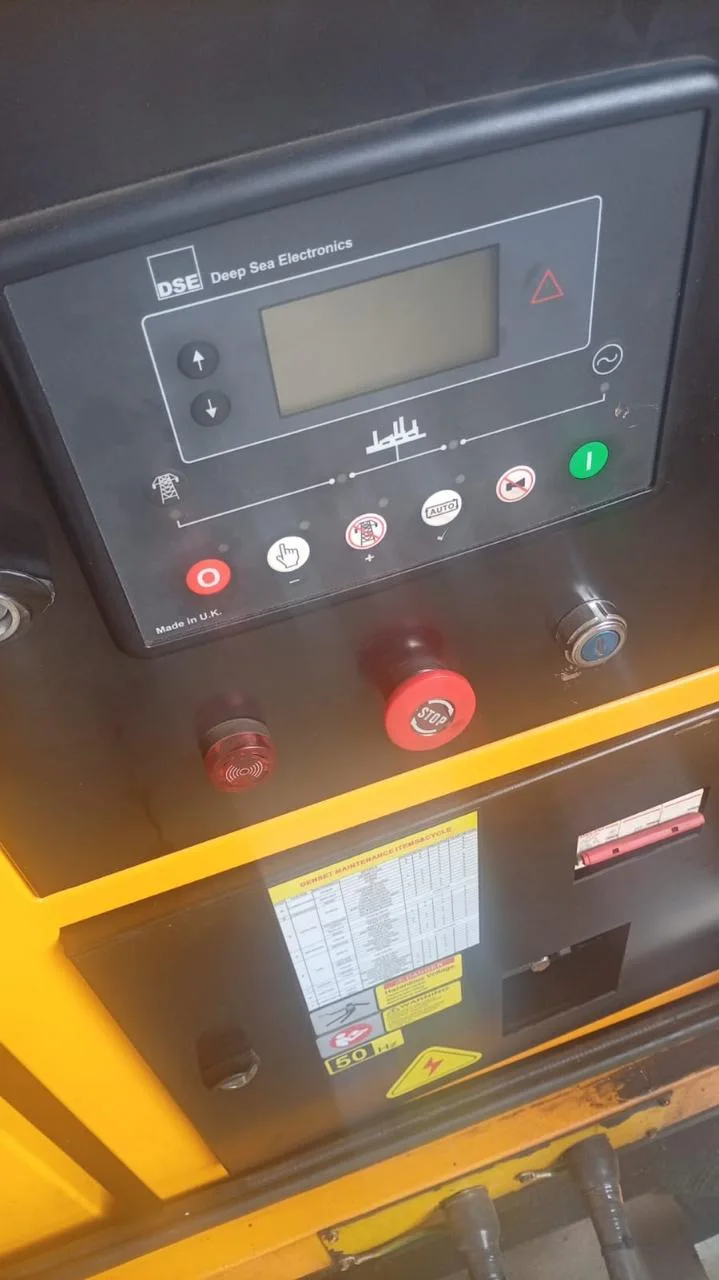
- The module name on the panel, when it is visible.
- Fault or alarm
- What the set does, and any text on the screen.
- Photos
- The generator, the data plate, and the controller or alarm. Send these on WhatsApp.
Book a Visit
Ask with the plate photo
Send the data plate and your question, and we answer for your specific set.
- Call
- 082 057 4605
- Message us on WhatsApp
What happens next
- We reply with questions about the generator, or to book a visit.
- A technician comes to you. For a breakdown we arrive within 1 hour.
- The fault is diagnosed on site and you get a written quote. No work starts until you accept it.
Charlie, lead technician: Degree in Mechanical Engineering, Degree in Electrical Engineering, Diesel Plant Fitter. Generator specialists since 2000.