
Industrial generators
Industrial Generator Repairs Across Gauteng
We diagnose and repair industrial diesel generators on site for factories, processing plants, large warehouses and heavy standby systems across Gauteng, from the engine and fuel system to alternators, controllers and ATS panels. Downtime costs production, so we answer breakdown calls 24/7, arrive within 1 hour and give you a written quote before any repair. Planned servicing by running hours, load bank cadence and SLAs are on our industrial servicing and maintenance page.
Callout fee waived when you accept our written quote. 1-year workmanship guarantee. See prices
- Three-phase prime and standby
- Load bank testing
- 24/7, arrive within 1 hour
- 1-year workmanship guarantee
- Onsite across Gauteng
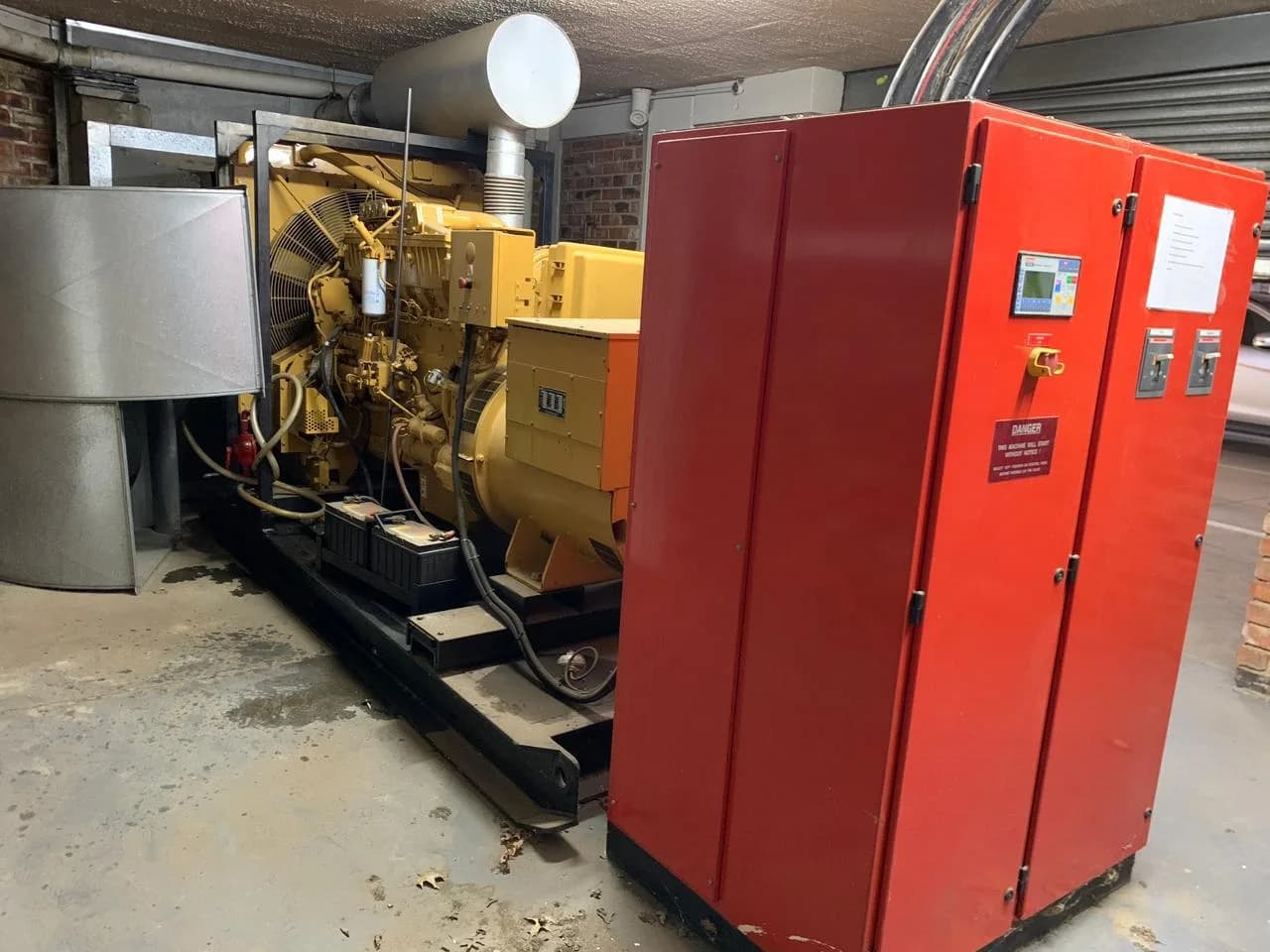
Heavy standby
Industrial diesel generator repairs and diagnostics
An industrial generator needs a planned visit, not a routine house call. Send us the kVA, the engine and alternator make, the fault and anything that affects access, such as a plant room, lifting requirements or a production window. We then arrive with the right test equipment and the parts the fault is likely to need.
Faults on large sets cluster in a few places. The engine may not start, may not hold speed, or may shut down on temperature or oil pressure. The alternator may lose voltage once the real load arrives. A restricted fuel system shows up under load long before it shows at idle. And the controller and ATS decide whether the plant ever receives a start command. We test each one in turn and show you the readings.
A start in the yard does not prove an industrial generator. A load bank test shows whether your set holds voltage, frequency and temperature at a known load, and planned maintenance keeps running hours, cooling, fuel condition and batteries under control between shifts and outages. We have repaired generators since 2000, and that fault finding shapes how we test your set.
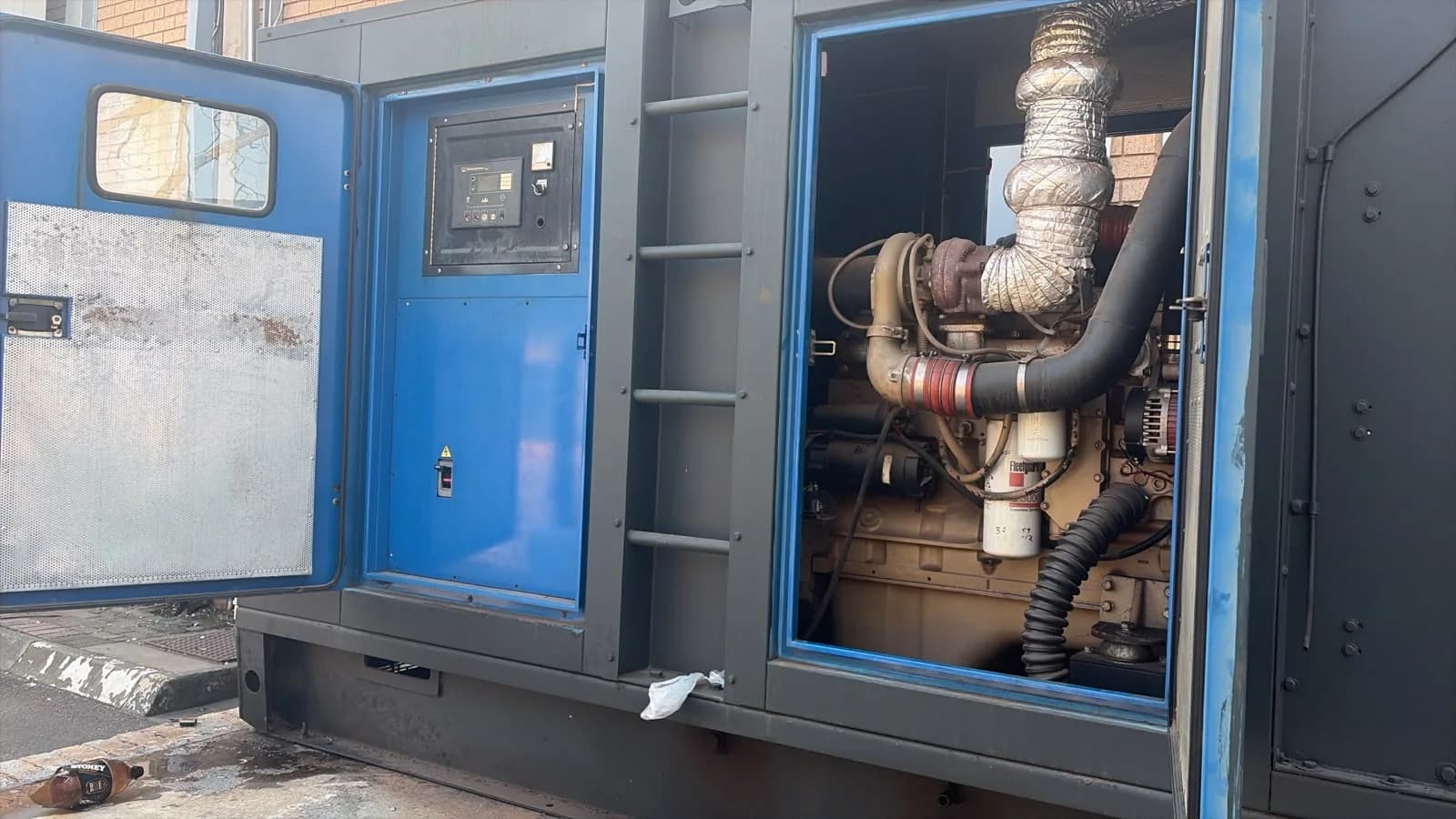
The systems on a large set
Large generator fault diagnosis
Industrial generator alternator repairs
We test for no output, low voltage and winding faults on large alternators. We recommend a rewind only when the insulation and resistance tests show the windings have failed.
Fuel-system repairs
We clear filters, air leaks and lift-pump faults on diesels that starve as soon as the load arrives. Injector and injection-pump work follows once those simple restrictions are ruled out.
Cooling and overheating
We check radiators, coolant, fans and airflow after a long run. A temperature trip under production load tells us something is wrong, so we find the cause before the set goes back on duty.
Controllers and ATS
We test the controller and the transfer switch that start the set and move a large board, working safely on isolated gear so your plant changes over when the mains fails.
Voltage and frequency faults
We meter low voltage, hunting voltage and falling frequency separately. Frequency follows engine speed, so we trace the speed or fuel fault first and set the AVR after.
Load bank testing
A controlled load answers the real question for a large set: can it carry its rated capacity, not just fire up on a test run.
Servicing and maintenance
Planned servicing by running hours, bulk-tank fuel checks and SLAs are set up on a separate programme, so a repair visit stays a repair visit. See industrial servicing and maintenance below.
Industrial generator sizes
Industrial sets usually start around 500 kVA and run past 1,000 kVA. Send the rating from the data plate so we plan the right test gear and access.
Industrial callouts across Gauteng
Send the site location, the kVA and the access route, and we arrive prepared for your set, whether the visit is planned or a breakdown.
When a set fails on site
A breakdown visit on a plant, step by step
A servicing visit runs to a schedule. A breakdown runs to a fault, and this is the order we follow on a factory or plant.
01
What to send
The kVA, the engine and alternator make, the controller model, the alarm on the screen and how we reach the set. A photo of the data plate helps.
02
Permit and isolation
Your engineer and we settle the permit to work and the isolation points first, so diagnosis happens on gear that is safe to open.
03
Who meets us, and where
Name the person who meets us and where the set stands, whether plant room, yard, roof or basement, and any lifting route to it.
04
Diagnosis, then a written quote
We test the isolated set until the cause is shown, explain the readings and give you a written quote before any parts are fitted.
05
Parts and the repair
Once you accept the quote we carry out the repair on site and replace only what the diagnosis found, not a list of guesses.
06
Proof under load before hand-back
The set is proven on load before we hand it back, with a load bank when your production load is too valuable to test on.
Plant-floor symptoms and their likely causes
Start with what you saw on the plant. Each symptom points to a short list of causes, and the linked page explains how we test for them.
| Symptom on the plant floor | Likely cause | Read more |
|---|---|---|
| Trips when production load arrives | Overload, an engine that cannot hold speed as the load steps up, or a voltage, cooling or electrical fault. | Generator trips under load |
| Frequency falls or hunts | Engine speed is not steady: fuel delivery, the governor or the controller, since frequency follows speed. | Generator low frequency |
| Black smoke after light-load running | Unburnt fuel from long periods at low load, or a fuel, injector or air restriction fault. | Generator black smoke |
| Temperature trip under load | Low coolant, a blocked radiator, a slipping belt or poor airflow through the plant room. | Generator overheating |
| Set runs but the board never returns to mains | Mains sensing, timers or contactors in the transfer switch, not the engine. | Not switching back to mains |
| Starts, takes load, then dies as the filter clogs | Water or diesel bug in the fuel, blocking filters once the flow rises. | Contaminated diesel |
| Knocking or grinding from the set | The engine, injectors, an alternator bearing, mounts or belts, found by diagnosis before the set runs again. | Generator knocking noise |
| Stayed silent when the mains failed | The battery, the controller mode, a stored alarm or the start signal from the ATS. | Generator not auto-starting |
For plant and maintenance engineers
Industrial and large standby sets
If you run a factory, plant or large warehouse, you need a generator contractor who plans around production and proves the set under load. Here is how we work on large three-phase plant.
Three-phase prime and standby plant
We repair and maintain three-phase diesel sets on standby duty, which wait for a mains failure, and on prime duty, which run as the main supply for long hours. Tell us the duty and we check the wear points that come with it.
Controllers we support
We diagnose, configure and replace Deep Sea, ComAp, SmartGen and Datakom controllers, including alarm logs, AMF settings, engine protections and remote-start inputs.
Load bank testing
We step the load up to the rating you need and record voltage, frequency and temperature at each stage. Our cost guide puts load bank testing at R2,800 to R5,500, and your written quote confirms the figure for your set.
Planned downtime
We agree the shutdown window with your engineer or production manager before we arrive. We bring the parts, test gear and labour the job needs, so the set is off line for as short a time as possible.
Contracts after a site assessment
Customised maintenance contracts and SLAs, quoted in writing after we assess the plant; the full programme is on the servicing and maintenance page.
Engineering-led diagnosis
Our lead technician, Charlie, holds a Degree in Mechanical Engineering and a Degree in Electrical Engineering and is a Diesel Plant Fitter. That training across engines, alternators and controls shapes how we test large sets.
When a set fails mid-shift, call 082 057 4605 at any hour. We run a 24/7 breakdown response and arrive within 1 hour. For planned work, see industrial servicing and maintenance, or ask for a site assessment and we will walk the plant room, read the plates and quote in writing.
Related Pages
Diesel, alternators, fuel and load
- Industrial Servicing & Maintenance Planned servicing by running hours, load bank cadence and SLAs
- Diesel Generator Repairs Diesel engines and sets
- Generator Sizes Large kVA bands
- Alternator Repairs Output end of a large set
- Fuel System Repairs Delivery under load
- Controller Repairs Alarms on the module
- ATS Repairs Transfer of a large board
- Load Bank Testing Prove capacity
- Generator Maintenance Contracts and SLAs in general
- Generator Callouts Book the site visit
- Commercial Generator Repairs Offices, retail and complexes
- Generator Servicing The general servicing page
- Generator Installation Commissioning a large set
- Generator Fault Finding Diagnosis before parts
- Single vs Three Phase Three-phase output and board checks
- Standby vs Prime Duty decides the wear points
- Stamford Alternators Repairs on Stamford output ends
- Leroy-Somer Alternators Repairs on Leroy-Somer output ends
- Deep Sea Controllers Alarms and settings on Deep Sea modules
Common Questions
Questions about industrial generator repairs
What counts as an industrial generator repair?
An industrial generator repair is work on a large, usually three-phase, diesel generator that serves a factory, processing plant, production site, large warehouse or other heavy standby or prime-power load.
Which industrial generator brands do you repair?
We service and repair Cummins, Perkins, Caterpillar, FG Wilson, Volvo Penta, MTU, Deutz, SDMO, Mahindra and Yuchai generators, Stamford alternators and Deep Sea controllers. We also work on Leroy-Somer and Mecc Alte alternators and on ComAp, SmartGen and Datakom controllers. Send the data plate and we match parts before the visit.
How is this different from a commercial repair?
Commercial work covers business premises and their standby sets. Industrial work covers heavier diesel plant, higher loads, prime-power duty and the access, lifting and shutdown planning that come with it.
Do you repair three-phase industrial sets?
Yes. We repair and maintain three-phase sets on prime and standby duty. Send the kVA and the supply voltage so our output checks match your board.
Can you work on the alternator of a large set?
Yes. We test the output first and separate AVR, excitation and winding faults. If the windings have failed, we quote the rewind as a separate job.
The set runs unloaded and fails in production. Can you diagnose that?
Yes. We test fuel delivery, speed, voltage, cooling and the breaker under load, and we use a load bank when your production load is too valuable to risk on a test.
Can you work around our production schedule?
Yes. Repairs are booked into the shutdown window you give us, including nights, weekends and public holidays, because we are open 24/7. Planned servicing and load tests are scheduled the same way on our industrial servicing and maintenance programme.
Do you adjust injection pumps on site?
We clear the simple restrictions first: filters, air in the lines and lift-pump delivery. If the injection pump or injectors then need calibration, we quote that as a separate specialist repair.
Do you maintain industrial sets, or only attend breakdowns?
Both. Breakdowns are attended around the clock. Servicing by running hours, load bank testing and customised SLAs are described on our industrial servicing and maintenance page.
Which areas do you cover?
We cover industrial sites across Gauteng, including Johannesburg, the East Rand (Germiston, Boksburg, Benoni, Kempton Park), the West Rand, Pretoria, Midrand and the Vaal.
Still unsure what the fault is? Call or WhatsApp 082 057 4605 for onsite diagnosis.
Service Areas
Onsite visits across Gauteng
We come to your generator anywhere in Gauteng, 24/7. Choose your region for local suburbs, call-out details and the faults we see most there.
What to send before we attend
These details help us plan the visit and bring the right parts. Send what you can on WhatsApp; if you can’t find the model number, we still book the visit.
- Location
- The suburb or site, so the visit can be booked in the right area.
- Make and model
- The generator brand and model, if they are known.
- kVA
- The size printed on the data plate.
- Fuel type
- Diesel, petrol, LPG, natural gas, or dual-fuel.
- Controller model
- The module name on the panel, when it is visible.
- Fault or alarm
- What the set does, and any text on the screen.
- Photos
- The generator, the data plate, and the controller or alarm. Send these on WhatsApp.
Book a Visit
Book an industrial generator repair
Send the kVA, the engine make, the fault and how we reach the set. We plan the visit around your production and give you a written quote before work starts.
- Call
- 082 057 4605
- Message us on WhatsApp
What happens next
- We reply with questions about the generator, or to book a visit.
- A technician comes to you. For a breakdown we arrive within 1 hour.
- The fault is diagnosed on site and you get a written quote. No work starts until you accept it.
Charlie, lead technician: Degree in Mechanical Engineering, Degree in Electrical Engineering, Diesel Plant Fitter. Generator specialists since 2000.