
Fault finding
Generator Fault Finding & Diagnostics
We find the real cause of a generator fault before we replace a single part. We test the battery, fuel, controller, cooling and electrical systems on site across Gauteng, show you what failed, and give you a written quote for the fix.
Callout fee waived when you accept our written quote. 1-year workmanship guarantee. See prices
- Test before parts
- Starting, fuel and electrical
- Onsite across Gauteng
Diagnosis first
How do we find a generator fault?
We start with what the generator actually does. A click, a crank with no fire, a start that dies, a run with no power and a trip when the building connects are five different faults, and each one sends us to a different system first.
Then we test in order: the battery and starting circuit, fuel delivery, the controller and its alarms, the ATS start signal, cooling and oil-pressure shutdowns, engine speed and frequency, and finally the alternator, AVR and output wiring. We replace a part only when a reading proves it has failed.
Once the fault is fixed, we run the set the way it failed and check it again. A start in the yard does not prove the generator will carry your building, so when the complaint was a trip or a shutdown on load, we put it back on load before we leave.
Our method
Six steps from symptom to fix
01
Listen to the symptom
You tell us what the set does and when it started. We ask about recent services, fuel deliveries and storms.
02
Read the controller
We record any alarm, the alarm history and the running hours before anyone resets the screen.
03
Check the basics
Battery voltage, fuel level and quality, and oil and coolant levels. These rule the quick causes in or out first.
04
Test the suspect system
We meter the circuit or measure the delivery that matches the symptom: start signal, fuel supply, voltage or frequency.
05
Show you the cause
We explain what failed and why, and give you a written quote before we repair it.
06
Re-test after the repair
We repeat the conditions that caused the fault and check voltage and frequency once the engine is stable.
Where the checks go
Starting, electrical, fuel and control diagnosis
Starting faults
No crank, a click or a failed automatic start. We test the battery and the start request before we look at the engine.
Electrical faults
The engine runs and the building stays dark. We meter the breaker, the AVR and the alternator output.
Fuel faults
A crank with no fire, or a run that dies. We check for air, blocked filters and aged diesel before we suspect the pump.
Controller alarms
We read the alarm and test the sensor or input behind it, with every protection left connected.
Alternator and AVR
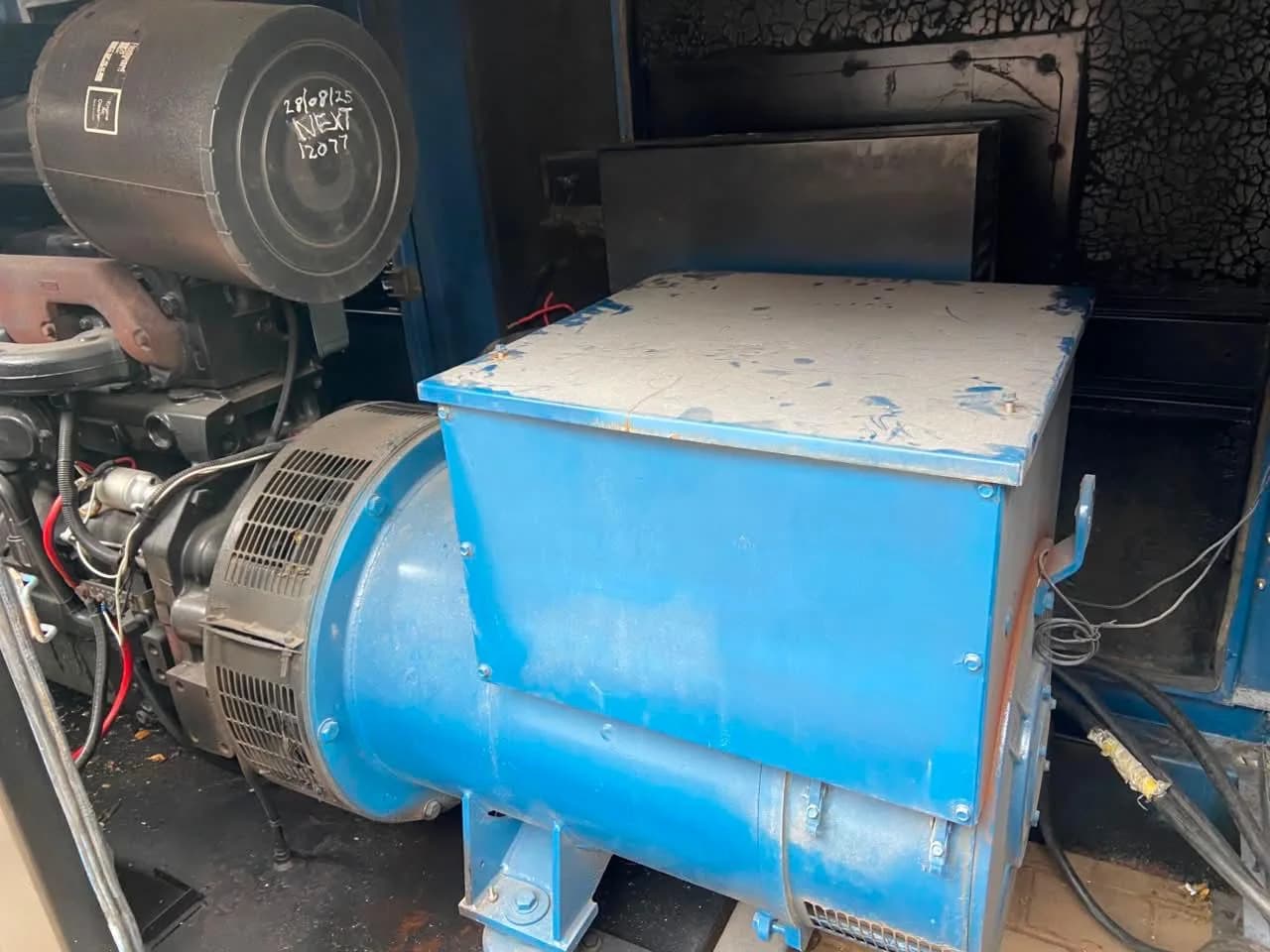
No voltage, low voltage and unstable voltage each need a different test. We prove the regulator before we recommend a rewind.
Cooling faults
A high temperature shutdown gets a check of the coolant level, airflow, the radiator and the load on the set.
Before you call
Help us find the fault faster
What to send
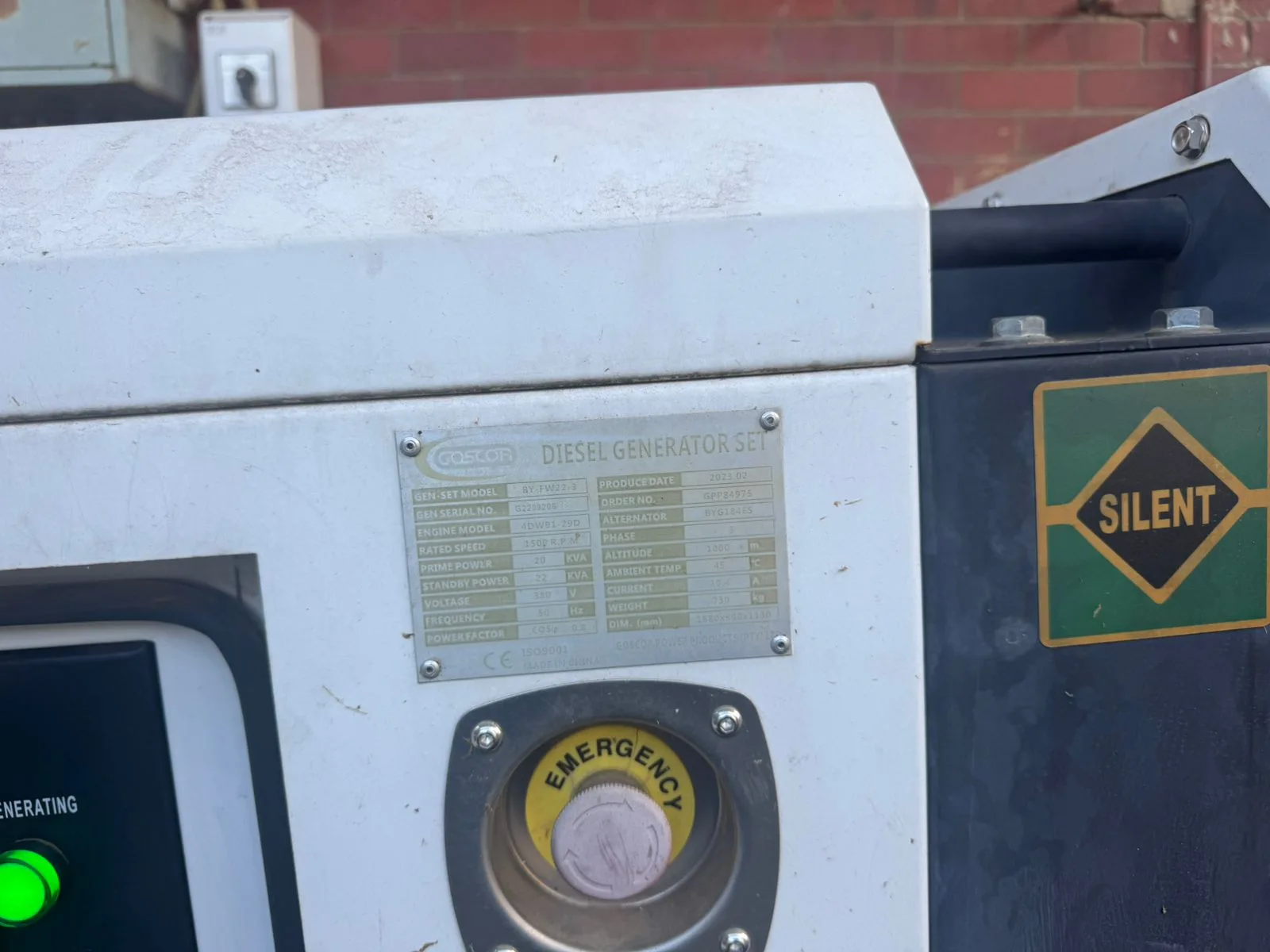
Your suburb, the fuel type, whether it cranks, whether it has made power since the fault started, any alarm text, and photos of the data plate and the controller screen.
Try the symptom finder
Our generator symptom finder lists likely causes for the signs you pick, so you can describe the fault clearly when you call.
Stay safe while you wait
Leave the panels closed, switch the set off if it is misbehaving, and keep clear of a hot engine and its fuel.
What it costs
The callout fee is R400 to R700 in business hours and R700 to R1,400 after hours, and it is waived if you accept the quote. The diagnosis is included when you go ahead with the repair.
Related Pages
Repairs, the symptom finder and fault guides
- Generator Repairs Book the repair once the fault is found
- Generator Symptom Finder Pick the symptoms to see likely causes
- Generator Not Starting No crank, a click, or no start
- Cranks But Won't Start Turns over but will not fire
- Not Auto Starting Fails only when the mains drops
- Starts Then Stops Fires, then shuts down
- Not Producing Power Runs with no usable output
- Low Voltage Output is present but low
- Unstable Voltage Voltage moves or lights flicker
- Low Frequency Hz or engine speed is low
- Trips Under Load Fine until the building connects
- Overheating High temperature shutdowns
- ATS Repairs Transfer switch and start signal
- Controller Repairs Alarms and the control module
- Alternator Repairs The output end of the set
- AVR Repairs The regulator when voltage is the fault
- Fuel System Repairs Filters, air and delivery
- Battery Not Charging Flat after the set has been standing
- Starter Motor Repairs A click or no crank
- Fuel Solenoid Repairs No fuel release on a diesel
- Black Smoke Soot from incomplete combustion
- White Smoke Unburnt fuel or coolant
- Blue Smoke Oil burning in the engine
- Surging or Hunting Revs that rise and fall
- Knocking or Noise Engine, alternator or mounts
- Not Switching Back Stays on generator after the mains returns
- Low Oil Pressure Real pressure loss or a sensor fault
- Generator Callouts How a callout works and what it costs
Common Questions
Questions about generator fault finding
What is generator fault finding?
It is the testing we do on site to find which system failed, so we replace only the part that caused the fault.
Do you replace parts before testing?
No. We test first and replace a part only when a reading proves it has failed.
How much does fault finding cost?
The callout fee is R400 to R700 in business hours and R700 to R1,400 after hours. The callout fee is only payable if you do not accept the quotation. If you accept the quotation, the callout fee is waived. The written quote is free, and the diagnosis is included at no extra charge when you go ahead with the repair.
Can one symptom have more than one cause?
Yes. A no-start can be the battery, the fuel, a controller alarm or the starter. Our tests separate them so you pay for the right repair.
What should I tell you when I book?
What the generator does, the fuel type, your suburb and any words on the controller screen. A photo of the data plate helps.
Is a generator that will not start the same as one that will not start automatically?
No. If it starts on the key or button but not when the mains fails, the fault is in the automatic start: the controller mode, the mains sensing or the ATS signal.
Is no power the same as low voltage?
No. No power means there is no usable output at all, while low voltage means output is there but too low. We test them differently.
How quickly can you come out?
We are open 24/7 and arrive within 1 hour for breakdowns across Gauteng.
Still unsure what the fault is? Call or WhatsApp 082 057 4605 for onsite diagnosis.
Service Areas
Onsite visits across Gauteng
We come to your generator anywhere in Gauteng, 24/7. Choose your region for local suburbs, call-out details and the faults we see most there.
What to send before we attend
These details help us plan the visit and bring the right parts. Send what you can on WhatsApp; if you can’t find the model number, we still book the visit.
- Location
- The suburb or site, so the visit can be booked in the right area.
- Make and model
- The generator brand and model, if they are known.
- kVA
- The size printed on the data plate.
- Fuel type
- Diesel, petrol, LPG, natural gas, or dual-fuel.
- Controller model
- The module name on the panel, when it is visible.
- Fault or alarm
- What the set does, and any text on the screen.
- Photos
- The generator, the data plate, and the controller or alarm. Send these on WhatsApp.
Book a Visit
Describe the symptom
Call or WhatsApp 082 057 4605 and tell us what the generator does. The brand helps, but the symptom tells us where to start.
- Call
- 082 057 4605
- Message us on WhatsApp
What happens next
- We reply with questions about the generator, or to book a visit.
- A technician comes to you. For a breakdown we arrive within 1 hour.
- The fault is diagnosed on site and you get a written quote. No work starts until you accept it.
Charlie, lead technician: Degree in Mechanical Engineering, Degree in Electrical Engineering, Diesel Plant Fitter. Generator specialists since 2000.