
Deep Sea controllers · On site
Deep Sea (DSE) Generator Controller Repairs and AMF Set-Up
ProService Generator Repairs services and repairs Deep Sea Electronics (DSE) generator controllers. When a DSE module will not start the set on a mains failure, will not hand the load back, shuts down on an alarm or has lost its settings, we find out whether the module, its wiring or the generator is at fault, then repair, reprogram or replace it on site across Gauteng. ProService Generator Repairs is an independent generator service and repair company.
Callout fee waived when you accept our written quote. 1-year workmanship guarantee. See prices
- Auto start and AMF modules
- Settings read before anything changes
- Reprogramming on site
- Written quote first
- Onsite across Gauteng
Know your module
Auto start or auto mains failure: why the DSE model number matters
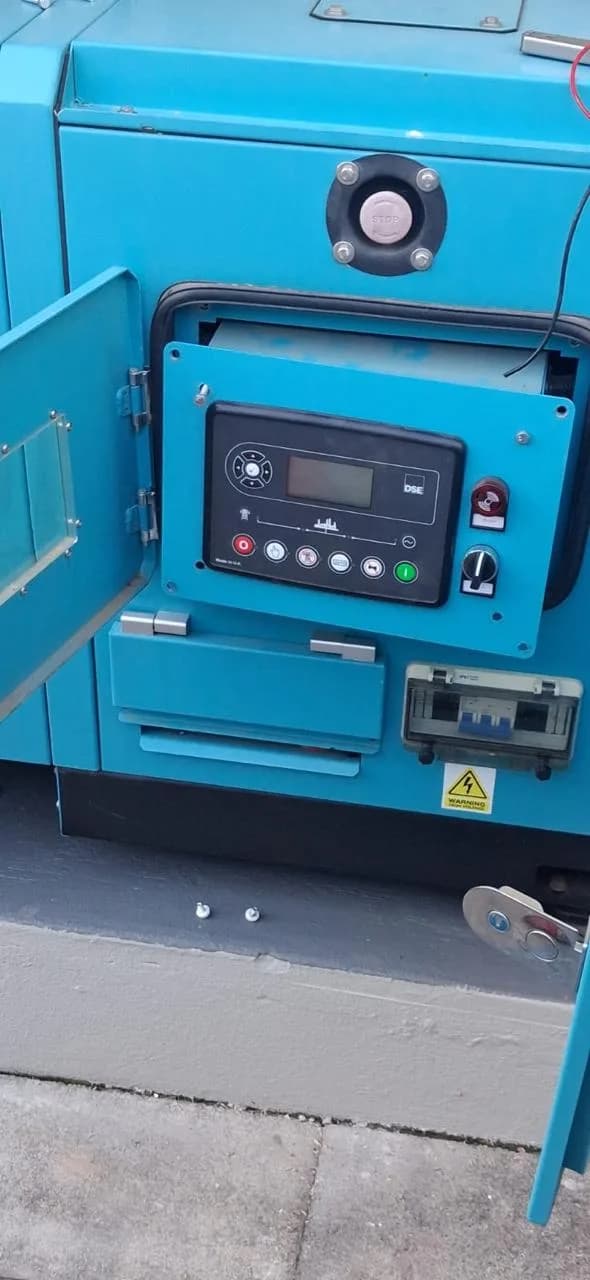
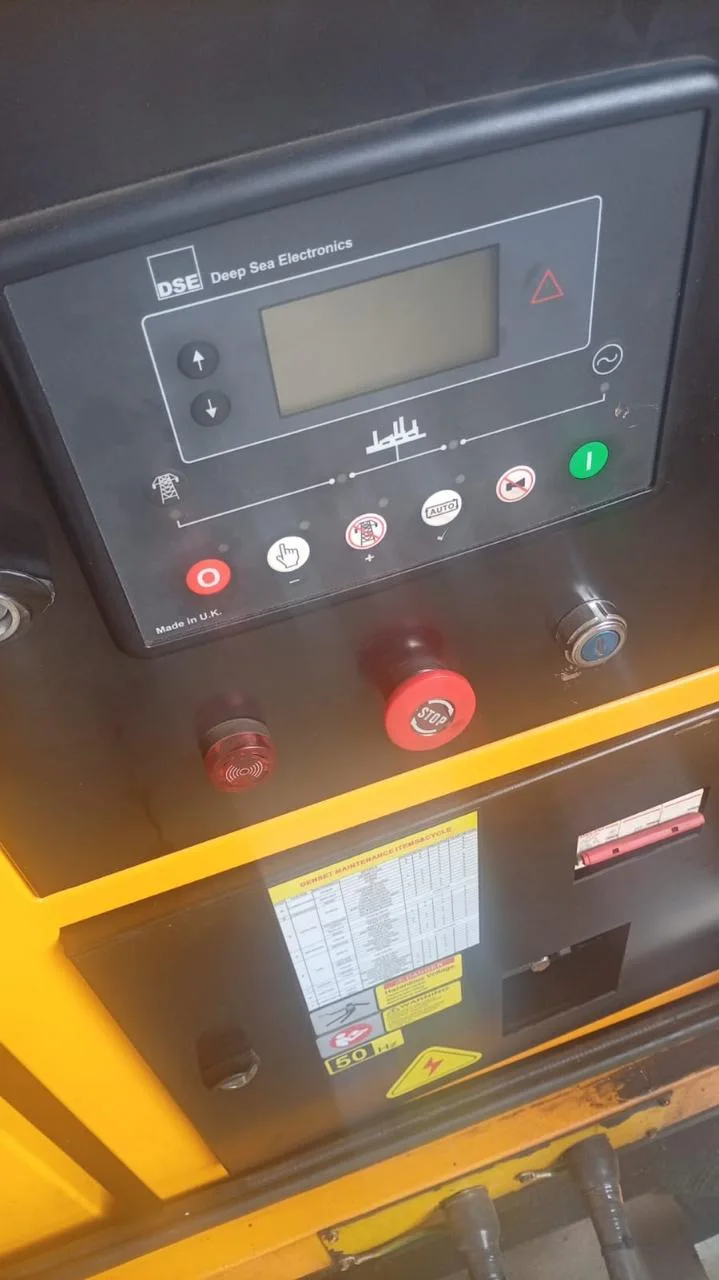
Deep Sea Electronics, a controller maker based in North Yorkshire in the UK, builds one of the modules we meet most often on diesel standby sets in Gauteng, whatever make the engine is. The model number is on the front of the module, usually with a generation such as MKII or MKIII, and it tells us how the set is meant to start.
Within a DSE range, a model ending in 10 (such as the DSE6110 or DSE7310) is an auto start module: it starts the generator when something else tells it to, usually a separate ATS controller or a remote start contact. A model ending in 20 (such as the DSE4520, DSE6120 or DSE7320) is an auto mains failure (AMF) module: it watches the mains itself and starts the set when the mains fails.
That difference decides where we look when a set does not start in a power cut. An AMF module that does nothing may not be seeing the mains failure at all. An auto start module that does nothing may never have received its start signal, which puts the fault in the ATS or the wiring, not the module.
The larger DSE8600 range is for synchronising: the DSE8610 shares load between several generators, and the DSE8620 can run a single set in parallel with the mains. Those systems are commissioned as a whole, so we assess them on site before quoting.
The AMF sequence
What a DSE auto mains failure module does in a power cut
Each step has its own delay or condition in the module’s settings. Knowing which step the set stopped at points straight to the fault.
01
Mains fails
The module sees the mains voltage or frequency leave its limits. It must be in Auto mode, with its mains sensing wired and fused, or nothing happens.
02
Start delay, then cranking
It waits a short set delay, so a flicker does not start the engine, then cranks for a set number of attempts. If the engine never fires, it shows a fail to start alarm.
03
Warm-up and transfer
Once the engine runs and voltage and frequency are within limits, it closes the generator contactor or signals the changeover, and the load moves to the generator.
04
Protection while running
Oil pressure, temperature, speed, voltage and frequency are watched the whole time. A warning lets the set run; a shutdown stops it to protect the engine.
05
Mains returns, return delay
When the mains is back and steady, a return delay runs before the load is handed back, so an unstable supply does not bounce the load.
06
Cooling run and stop
With the load back on the mains, the engine runs off load to cool, then stops and waits in Auto for the next failure.
What we do
Deep Sea module repairs, set-up and replacement
Fault diagnosis
We read the alarm and the module’s event log, then test its supply, inputs and outputs to separate a module fault from a real fault on the set.
AMF and auto start set-up
Mains sensing, start and return delays, crank attempts, cooling run and the contactor or changeover outputs, set for your installation and tested with a real mains failure.
Reprogramming
Lost or wrong settings are restored with the maker’s configuration software where the module and its access allow, and the settings are saved before and after.
Module replacement
A burnt or obsolete module is replaced with a compatible current DSE unit. Generations differ in wiring and settings, so the old configuration is read first where the module still allows it.
Sensors and wiring
Oil pressure and temperature senders, the speed signal, charge alternator and emergency stop circuits are tested, because most alarms start outside the module.
Commissioning test
We switch the mains off at the board and watch the full sequence, from start to transfer, return, cooling run and stop, before we leave.
What your Deep Sea module is doing, and what usually causes it
Note the mode light, the alarm text on the screen and what the set did, then call us. Please do not change settings from the front panel.
| What you see | Likely cause | Usual repair |
|---|---|---|
| Power cut, the set does nothing | Module not in Auto, emergency stop latched, mains sensing fuse or wiring, or no start signal to an auto start module | Check the mode and the sensing; trace the start signal from the ATS |
| Cranks, then fail to start | Fuel, the fuel solenoid or battery voltage dropping while cranking | Test fuel delivery, the solenoid output and the battery under load |
| Screen goes blank or resets while cranking | Weak battery or a poor supply connection to the module | Load test the battery; repair the supply and earth connections |
| Engine runs, load stays off | Voltage or frequency outside the module’s limits, or a contactor or changeover fault | Measure the output; test the transfer output and the contactor |
| Mains back, still on generator | Return delay still running, mains sensing lost, or the changeover not returning | Check the mains sensing; test the return output and the changeover |
| Shutdown alarm, runs again after reset | A real engine fault, or a sender or wire reporting one | Confirm with a gauge or meter before the sender or the engine is blamed |
| Wrong behaviour after a repair or upgrade | Settings lost, or a replacement module not configured for the set | Read and correct the configuration; commission with a mains failure test |
Control panel repair or reprogramming typically costs R3,500 to R14,000, depending on whether the module needs new settings, a repair or a replacement. Alarm meanings for DSE and other modules are on our generator controllers guide.
Common Questions
Deep Sea controller questions
Do you repair Deep Sea (DSE) generator controllers?
Yes. ProService Generator Repairs services and repairs Deep Sea Electronics (DSE) generator controllers. Brand names and trademarks belong to their owners and are used only to describe the equipment we work on. ProService Generator Repairs is independent and is not a dealer, agent or partner of any manufacturer.
How do I know which DSE module I have?
The model number is printed on the front of the module, for example DSE4520 MKII or DSE7320 MKII. Send us a clear photo of the whole module, including the screen, and we will tell you whether it is an auto start or an auto mains failure model.
Why does my DSE controller show a mains failure but not start the generator?
The module may not be in Auto mode, an emergency stop may be latched, the start delay may still be running, or the battery may drop too low to crank. On an auto start module, the start signal may not be arriving from the ATS. We check each in turn.
Can I change the settings from the front panel?
Some settings can be edited from the front panel, but changing delays or protection limits without knowing what the set needs can stop it starting in a power cut or remove engine protection. Leave the settings alone and call us.
Can you reprogram a Deep Sea module?
Yes. We restore or correct the start, stop, timer, alarm, sensor and auto mains failure settings with the maker’s configuration software, where the module and its access allow, and test the result with a real mains failure.
My DSE module is old. Can it be replaced?
Yes. We fit a compatible current DSE module. Wiring and settings differ between generations, so we read the old configuration where we can, set the new module up for your engine and changeover, and commission it before we leave.
Is Deep Sea the make of my generator?
No. Deep Sea Electronics makes the controller. The engine and the alternator are other makes, and their plates decide the engine and electrical parts.
How much does a Deep Sea controller repair cost?
Control panel repair or reprogramming typically costs R3,500 to R14,000. You get a written quote before any work starts.
Still unsure what the fault is? Call or WhatsApp 082 057 4605 for onsite diagnosis.
Related Pages
Controllers, starting and changeover
- Generator Controllers Alarms and modules from every maker
- Controller Module Repairs Diagnosis, reprogramming, replacement
- Not Auto Starting Mains fails and the set stays still
- Not Switching Back Mains returns, load stays on
- ATS Repairs The switch the module drives
- Changeover Switches Manual changeovers and the CoC
Service Areas
Onsite visits across Gauteng
We come to your generator anywhere in Gauteng, 24/7. Choose your region for local suburbs, call-out details and the faults we see most there.
What to send before we attend
These details help us plan the visit and bring the right parts. Send what you can on WhatsApp; if you can’t find the model number, we still book the visit.
- Location
- The suburb or site, so the visit can be booked in the right area.
- Make and model
- The generator brand and model, if they are known.
- kVA
- The size printed on the data plate.
- Fuel type
- Diesel, petrol, LPG, natural gas, or dual-fuel.
- Controller model
- The module name on the panel, when it is visible.
- Fault or alarm
- What the set does, and any text on the screen.
- Photos
- The generator, the data plate, and the controller or alarm. Send these on WhatsApp.
Book a Visit
Tell us what the DSE module shows
Send a photo of the module and any alarm on the screen, and tell us what the set did when the mains failed or returned.
- Call
- 082 057 4605
- Message us on WhatsApp
What happens next
- We reply with questions about the generator, or to book a visit.
- A technician comes to you. For a breakdown we arrive within 1 hour.
- The fault is diagnosed on site and you get a written quote. No work starts until you accept it.
Charlie, lead technician: Degree in Mechanical Engineering, Degree in Electrical Engineering, Diesel Plant Fitter. Generator specialists since 2000.